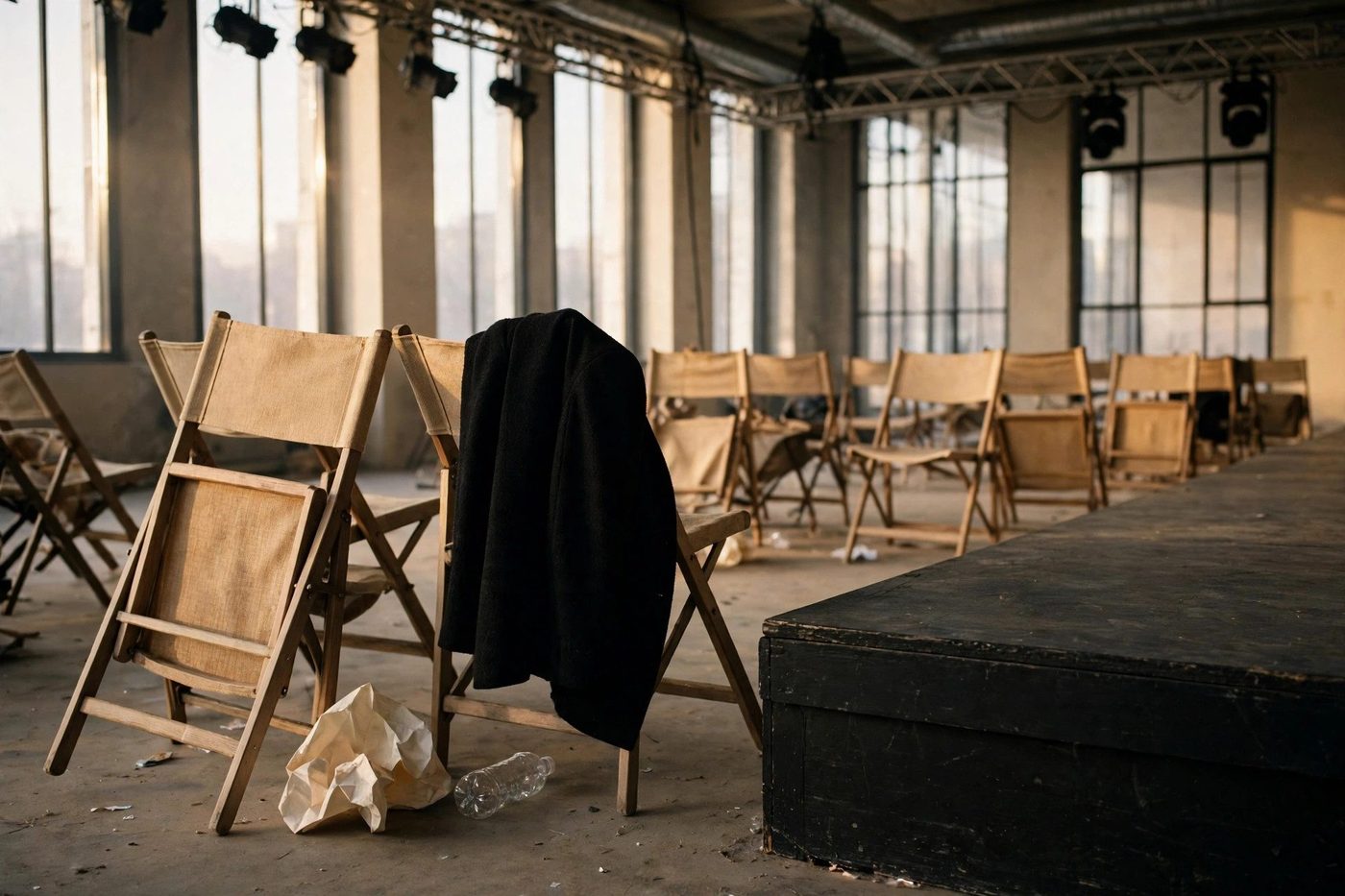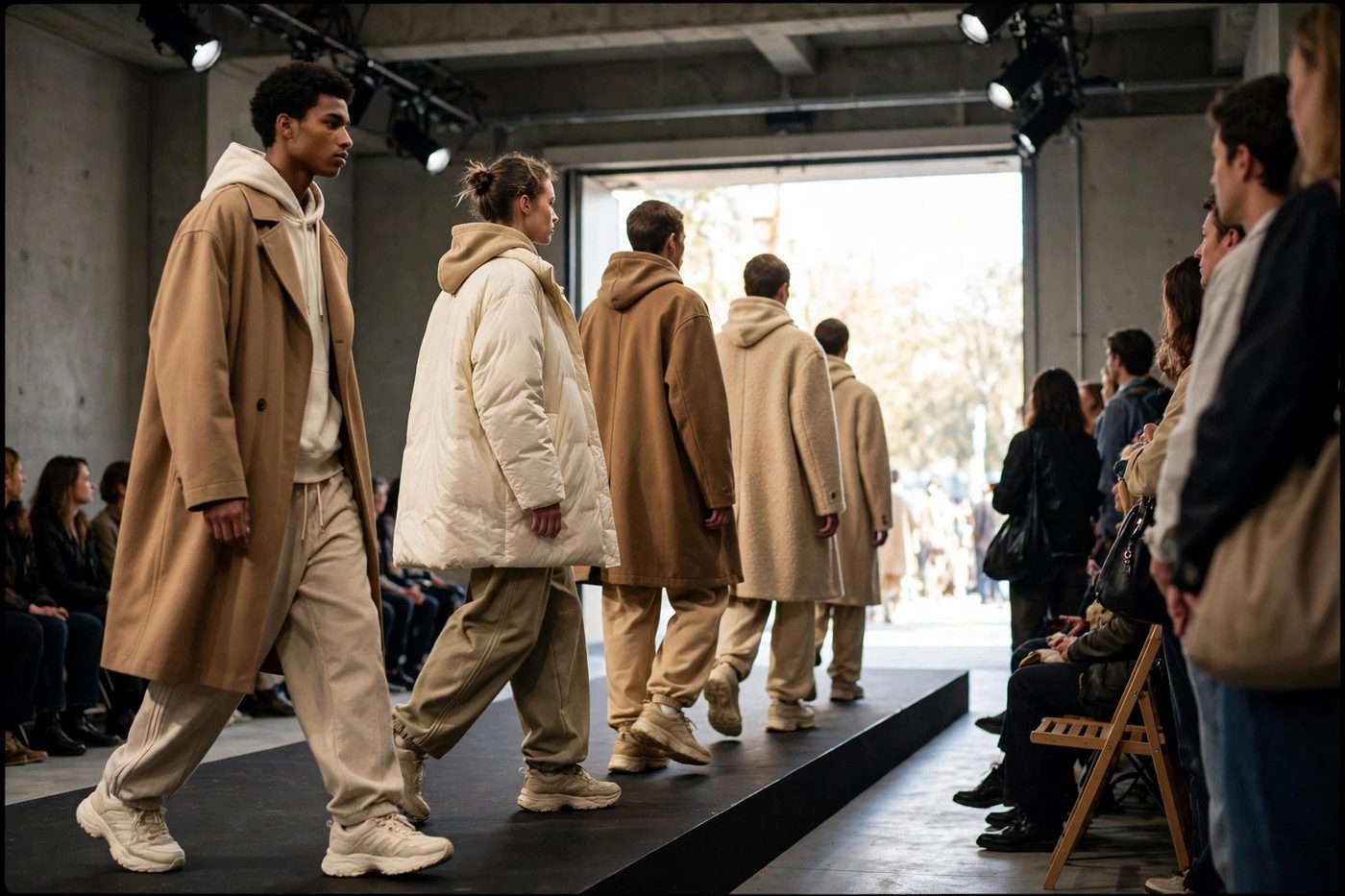
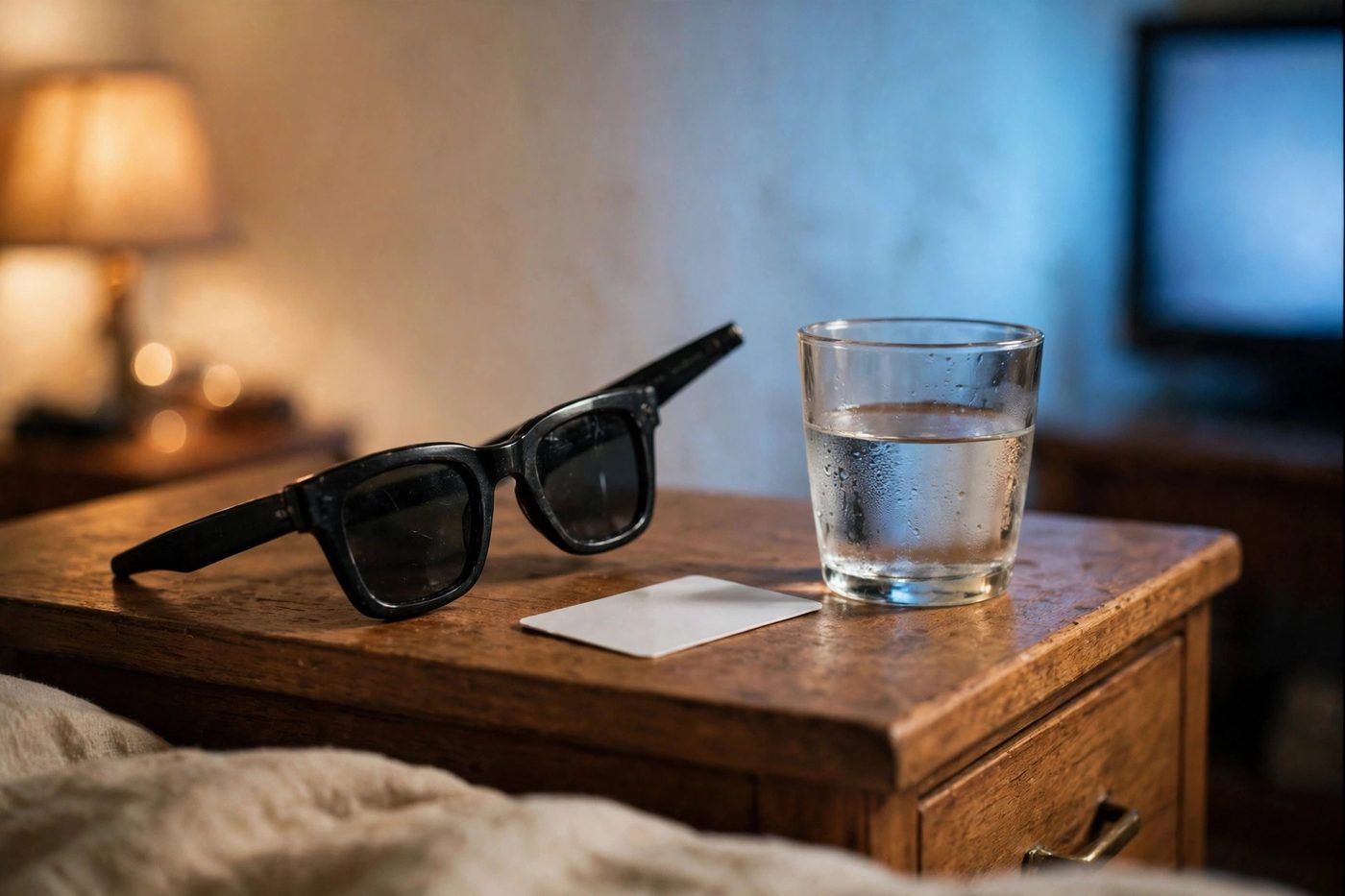
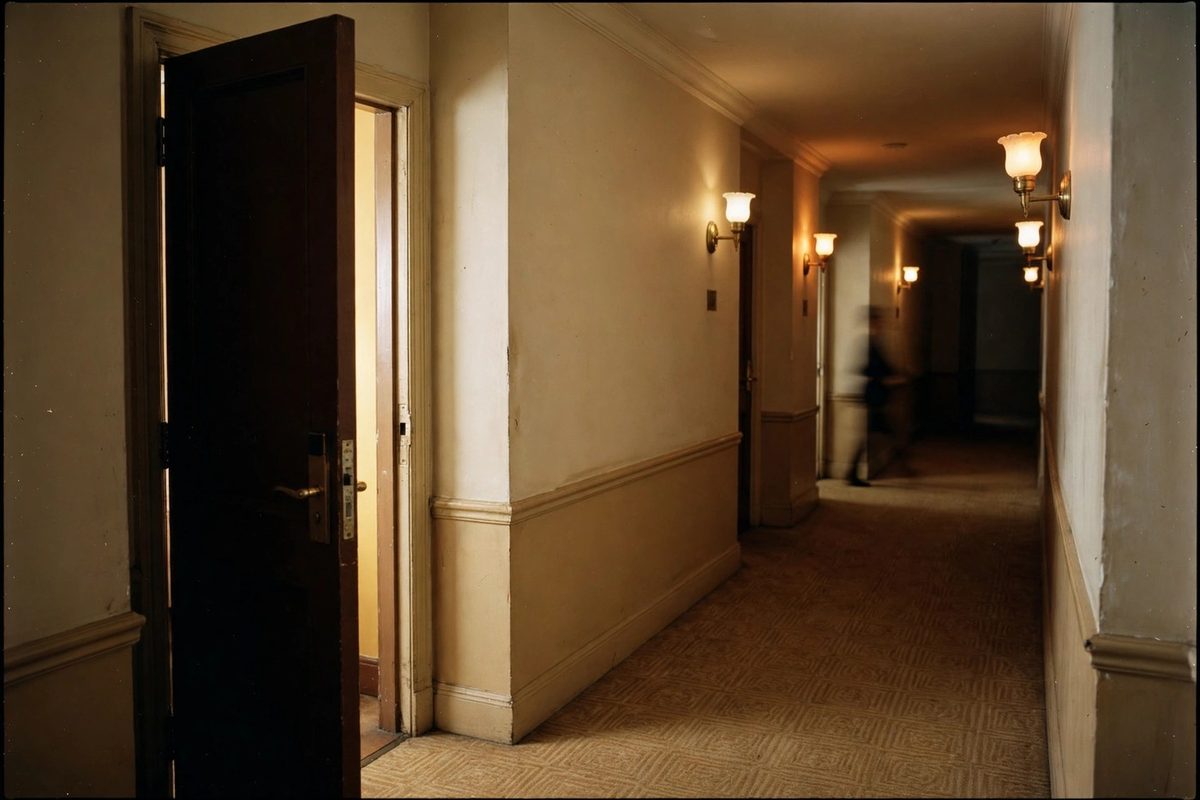
When a tech company holds a launch event, the first thing it talks about is specifications: the chip, the battery life, the weight — none of them can be missing. Gentle Monster did the opposite. On November 6, the Korean eyewear brand released a teaser for its first smart glasses collection: a short film directed by Jonathan Glazer and starring Joaquin Phoenix, in which he keeps running into strange events in an unfamiliar hotel, and the glasses are his tool for communicating with something unknown. No functions were demonstrated, no specifications announced, no price given. You get a story first. The product queues up behind it.
The casting is itself a line of dialogue. Glazer directed *Under the Skin* and *The Zone of Interest* and specialises in making everyday scenes feel quietly wrong; Phoenix needs little introduction — in *Her* he played a man who falls in love with an AI voice assistant, and putting AI-equipped glasses on him now pushes that twelve-year-old science-fiction premise one step closer to reality. The full film will not be released until mid-November.
Here are the facts that can currently be verified. The collection belongs to Google's Android XR partnership programme and is being developed with Samsung, with Gentle Monster responsible for design. As Variety reports, the glasses have no display and are audio-led: they connect to Google's Gemini assistant and can take photos hands-free, make calls and translate conversations. Pre-orders open on November 12; a public preview runs in New York from November 13 to 23; the official launch is in December. Two further details are worth noting. First, Google itself has still not officially confirmed these dates — the partners announced the schedule first. Second, back in June 2025 Google bought roughly 4% of Gentle Monster for about US$100 million. This is not a licensing cameo arranged at the last minute.
Why would Google put up the money and the operating system, and hand the face of the product to a Seoul eyewear brand? Many people still remember how Google Glass exited the stage a decade or so ago: the technology wasn't bad — it died because nobody wanted to be seen wearing it; it looked like a geek prop. This time the playbook amounts to an admission that the first gate smart glasses have to pass is aesthetics, not computing power. And the market today is led by Meta's Ray-Ban smart glasses (as both FashionUnited and Engadget describe it), which proved the same point first: it works first as a pair of glasses you can wear, and only second as a device. That is exactly what Gentle Monster has going for it: it is a brand famous for spectacle-shaped sunglasses and theatrical store installations, and letting it define what these glasses look like is far more credible than a tech company sketching them in-house.
There is another signal that's easy to miss: Gentle Monster is not the only brand giving Android XR a face this time. The American eyewear brand Warby Parker is also a Google design partner, with pre-orders likewise opening on November 12 (per Engadget). Set the two side by side and Google's division of labour becomes clear: Warby Parker is a mass-market eyewear retailer, everyday in both price range and distribution; Gentle Monster handles the other end — design first, conversation first — so the category can establish itself in a fashion context before anything else. A platform pushing in from the affordable end and the fashionable end at the same time is platform-level strategy, not one brand's crossover experiment. The New York public preview from November 13 to 23 is therefore not just a product showcase; it is a test Google has arranged for these glasses before they go on sale — to be looked at, up close, by passers-by.
Now the layers, kept separate. At the brand-communication level, this is a pure fashion-campaign playbook: film first, specifications later. In media commentary, the tech press is watching the platform and the dates while the fashion press watches the imagery — the same event, two industries, two different faces of it. At the level of actual buying behaviour, there is nothing to talk about yet: the price is unannounced, the product unlaunched, and no pre-order figures have been published. So at this stage only one conclusion holds: the order of release is itself a statement. These glasses want to be accepted as eyewear first and judged as a device second. Whether that statement stands will have to wait until the December launch and the price, when we see whether people are willing to wear them out of the house every day.

Everything else waits for the calendar to turn to December. Pre-orders open November 12; the public preview runs in New York from November 13 to 23; the launch is in December, and only then will the price and full specifications be announced. Until then, the only thing confirmed is the screening schedule.