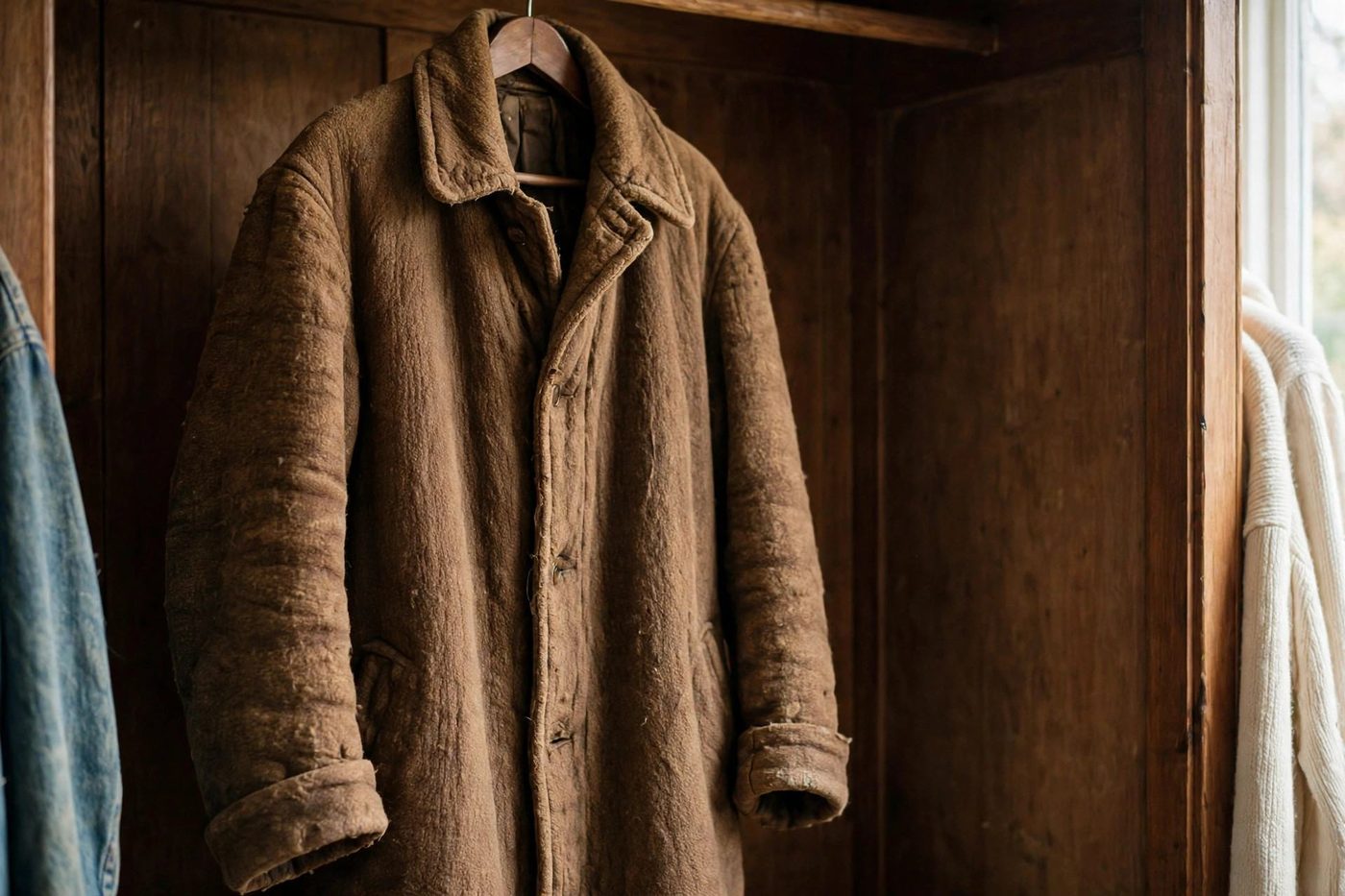
Try a small experiment. Picture two garments from your wardrobe. One is a coat that hurt to buy at the time — you hesitated for days before ordering — and that you then wore for four whole winters. The other is something you picked up casually while out shopping, so cheap you didn't have to think, wore two or three times, and never touched again.
Now ask: which one is more expensive?
By the price tag, the answer is no contest. But by the money you actually spent, divided by every outing it bought you, the answer most likely flips. A garment's price has a hidden way of being counted: the number you see at checkout is only the beginning of its total cost. After that, it still has to be divided by something — the number of times in its life that you wear it out of the house.
That is cost per wear. The formula is brutally simple: cost per wear is roughly the purchase price divided by the actual number of wears. If you want to count more carefully, you can add dry-cleaning, alterations and accessories, and subtract whatever value you recover when you eventually resell it or give it away. But for most people, the rough version is enough, because what opens up the gap is never the dry-cleaning money. It's the denominator.
An example shows how frightening that denominator can be. The numbers below are all illustrative and don't correspond to any real product — just apply your own clothes.
Example one: a coat, 3,200 yuan. After you bought it, you wore it every year from November to the following March, three times a week — roughly 45 wears a year — for four years: around 180 outings in total. Cost per wear: about 18 yuan.
Example two: a jacket, 299 yuan. Worn three times — once to a gathering, twice for commuting — after which you noticed it pilled and made you look bulky, and your hand never reached for it again. Cost per wear: about 100 yuan.
The price tags differ by more than ten times. The real costs differ by more than five times — the other way round. The 299-yuan piece is the true luxury item in the wardrobe.
What's more interesting is that everyone is in fact doing this sum unconsciously — just on the wrong side. People haggle without mercy over things they are certain to wear, yet are astonishingly generous toward things destined to sit idle, because the idleness happens months later and the pleasure of paying happens now. The hesitation before buying the coat was about the total price; the ease of paying for the jacket was about the unit price. Nobody thinks about the denominator on the spot.
If you're willing to take an honest inventory of your wardrobe, you'll find another pattern. List the clothes you actually wore out of the house in the past month, and for most people it's the same small set, over and over. Some people have counted for themselves: the pieces that appear frequently in a year make up only about a fifth of the wardrobe. The remaining eighty per cent are worn a handful of times; some still have their tags on. Whether the ratio is exactly eighty-twenty varies from person to person — but that tilted shape exists in almost every home.
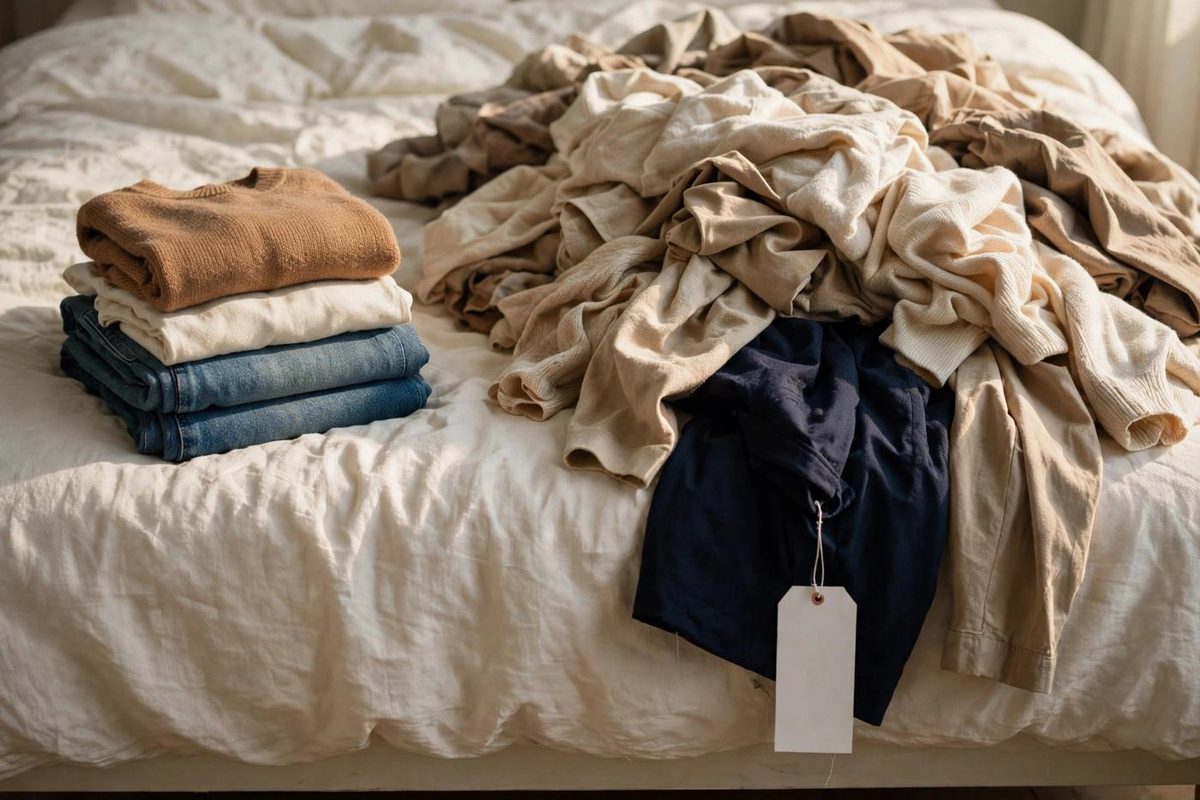
Why this happens isn't complicated. When we buy clothes, the person standing in the mind's eye is usually ourselves at some specific occasion: at the annual party, on holiday, five pounds lighter. The person who actually has to get dressed and go out every day is a different self — short on time, choosing convenience, wanting comfort. When the two selves don't line up, the clothes can only hang there. This is the commonest cause of wardrobe idleness: not that the clothes are bad, but that the occasion they belong to comes twice a year, or never came at all.
And idle clothes aren't free just because they're lying still. They keep charging rent — rent in wardrobe space, in the time spent rummaging every morning, in the patience it costs to try on three outfits before leaving and like none of them. The fuller the wardrobe, the more tiring the morning. That sounds like a greeting-card line, but it's a genuine decision cost: the more options there are, the more expensive each choice becomes. The idle eighty per cent sitting in your wardrobe is, in effect, taxing you every single morning.
So, the account done — how do you use it to buy less wrongly? That's the real subject. Before I buy clothes, I run three questions. I'll share them; they won't fit everyone, but they block most of the impulses.
One: can it combine with at least three garments I already own? A piece that can't combine can't enter the everyday rotation, and its fate is basically sealed. However good it looks, it needs a whole separate occasion built around it — and those occasions rarely appear.
Two: in the next thirty days, on which specific days will I wear it? This question forces you to name dates. Clothes that belong only to some imagined occasion usually give themselves away right here. It only counts if you can name three or more real days.
Three: at my honestly expected number of wears, what is its cost per wear, and am I willing to pay it? Take an 800-yuan garment you honestly expect to wear eight times: the cost per wear is 100 yuan. Then ask yourself directly — am I willing to pay 100 yuan for each of its outings? If yes, buy it. If no, put it back, or wait until its price falls to your level. The virtue of this conversion is that it turns "should I buy it" from an emotional question into an arithmetic one, and arithmetic doesn't get carried away.
A word of fairness for cheap clothes, though, so the account doesn't get used crooked. This method has never been about price levels; it's about fit. Buy an expensive garment wrong and the loss is simply harder. A 99-yuan T-shirt worn through summer after summer, out sixty times at a little over a yuan a wear, is one of the best investments a wardrobe can hold. What truly burns money is clothing that doesn't match your real life, at any price. Thinking for three extra minutes before you buy beats hanging something for three years after.
One more blunt method, oddly effective. At your next big clear-out, don't rush to throw things away. First pick out everything you haven't worn in the past year and add up the price tags. The total is usually much larger than you'd expect. Next time you're standing in a fitting room, run that number through your mind once, and your hand will be a good deal steadier. It isn't stinginess. It's giving your decisions a memory.