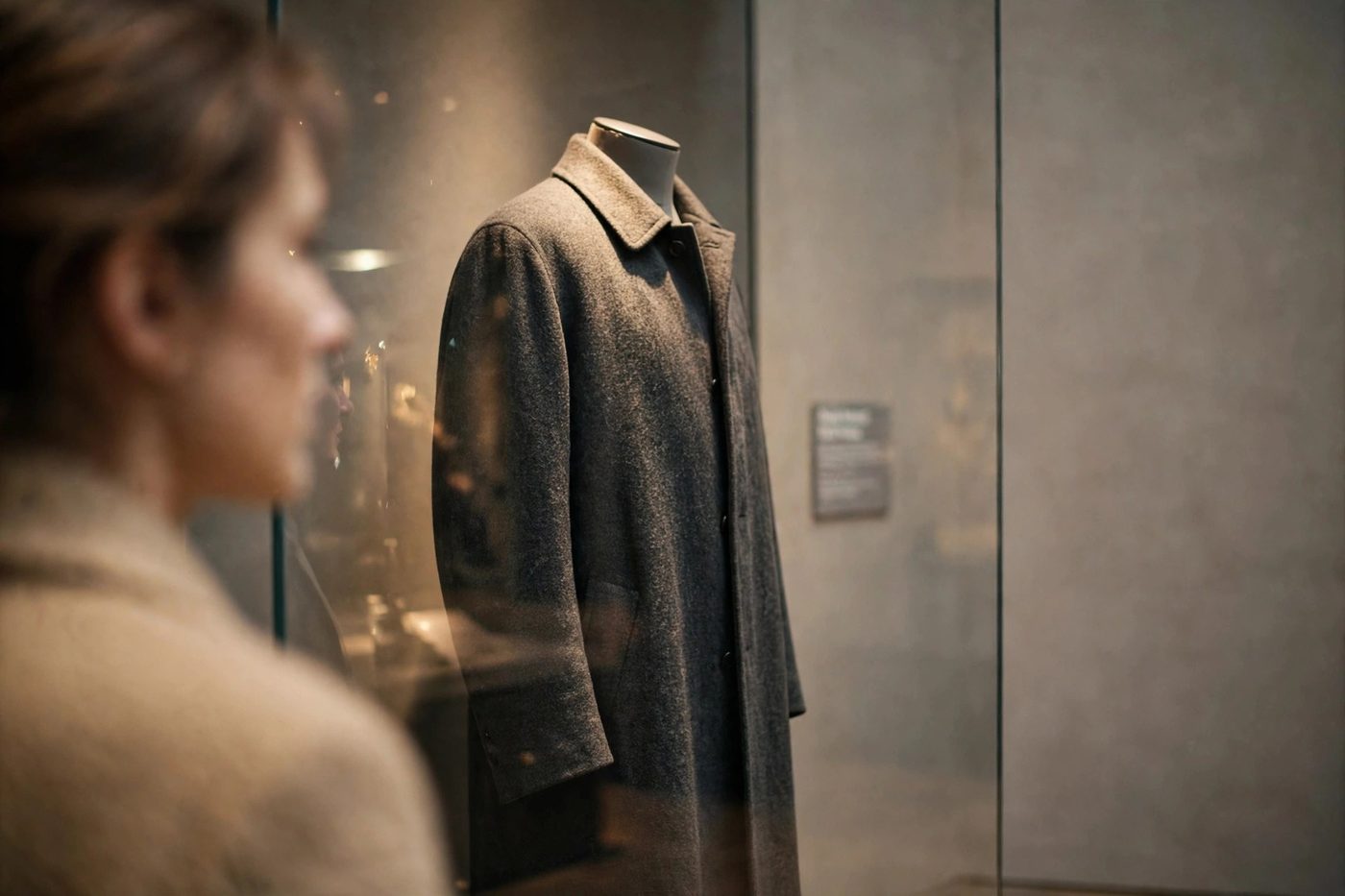
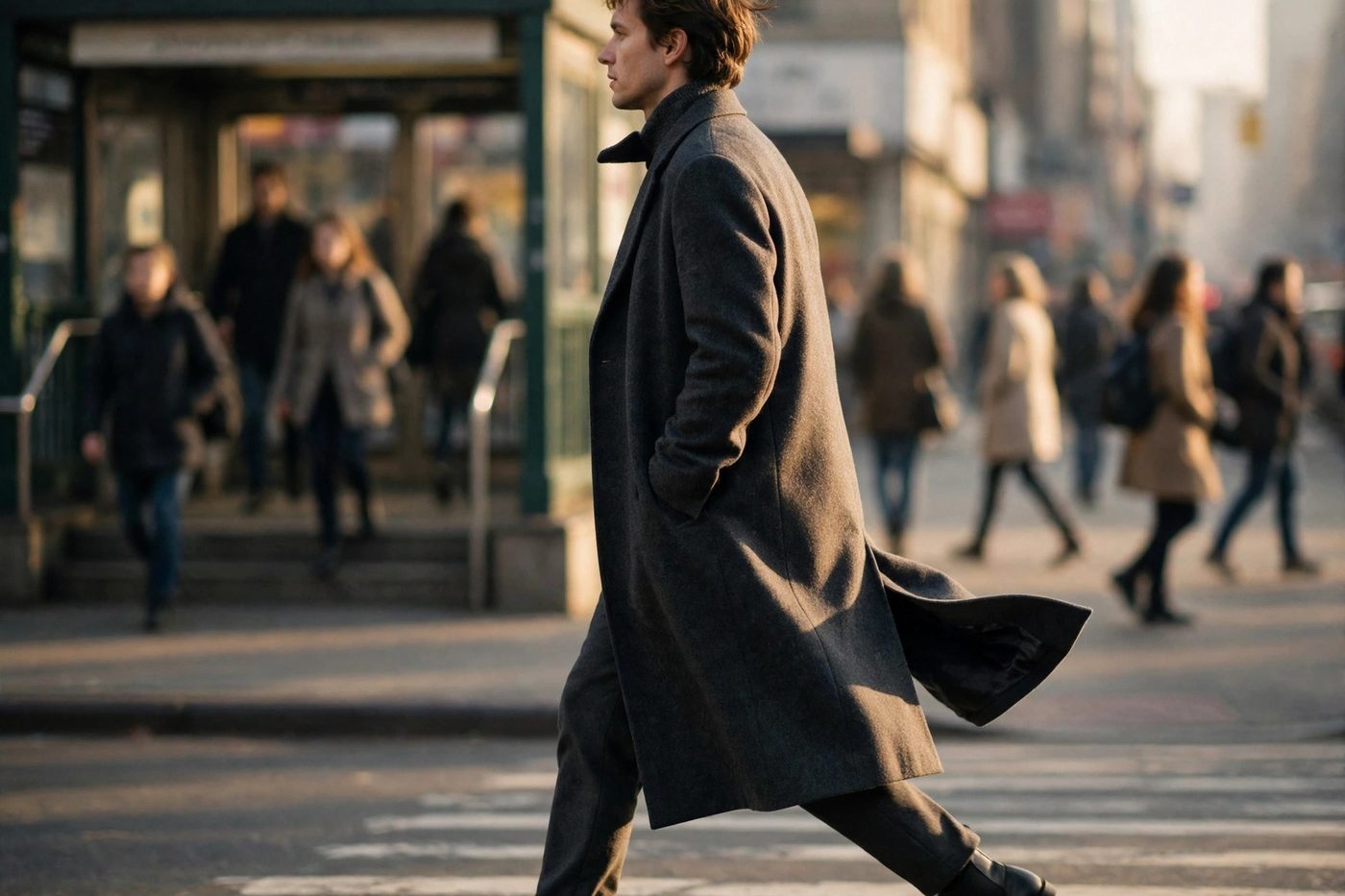
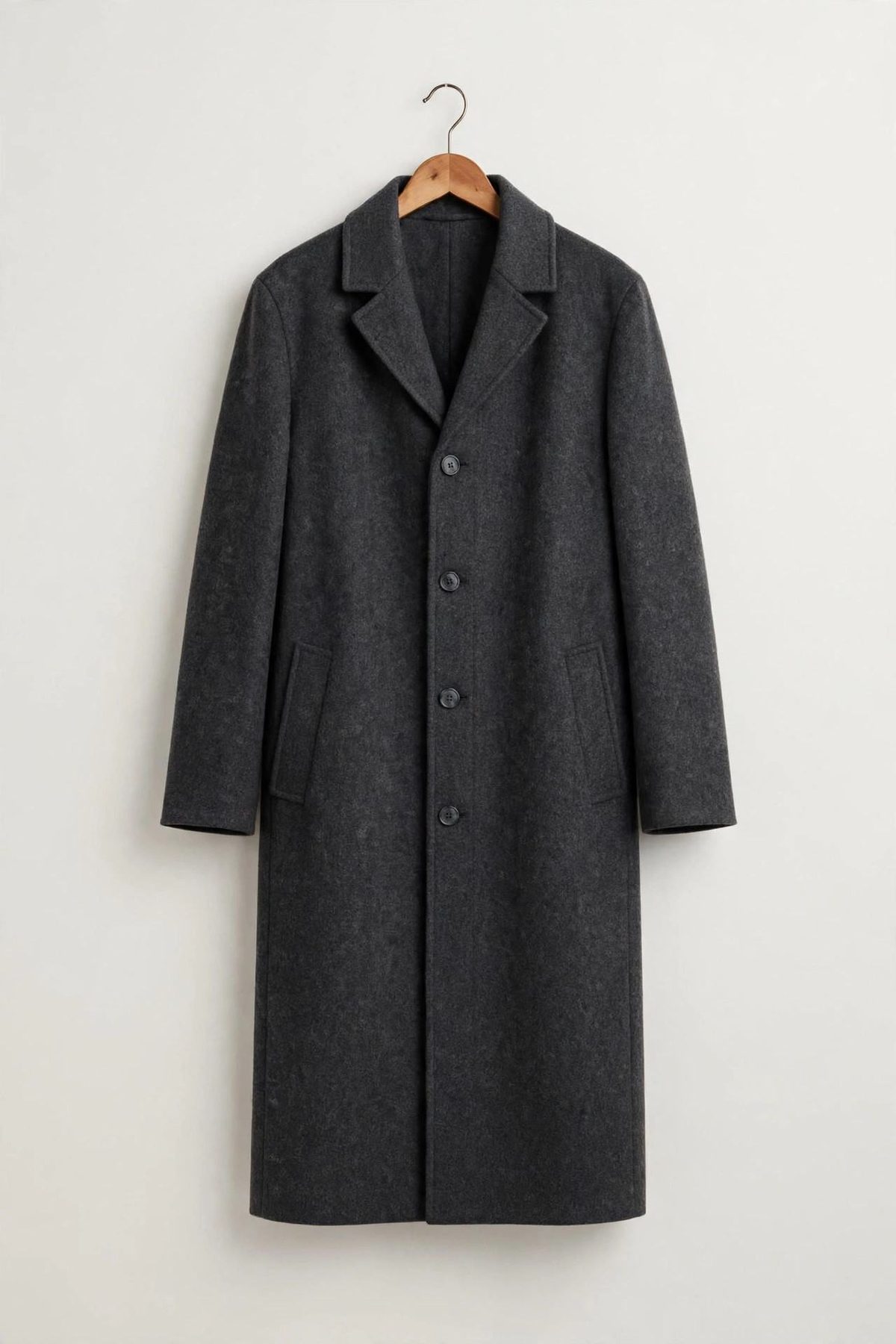
Lede: You have probably had this experience: the same coat, hanging in the white-background image on a shopping page, leaves you remembering no more than a product code. Move it into a street photograph — early light falling across it at an angle, the hem lifted slightly by the wind — and suddenly you understand it. The garment hasn't changed. What changed is the way of looking at it. Every day we swipe through a great many fashion photographs on our phones, staying a second or two on each; most are forgotten the moment they're seen. But good fashion photography has one unshowy effect: it slowly changes how we look at our own clothes, at street scenes, at light. That change is written in no trend report, yet it lasts far longer than remembering what's in fashion this season. A pair of eyes trained by photographs ends up changing more than dressing. It changes the way a person lives their days.
01The same coat, two fates
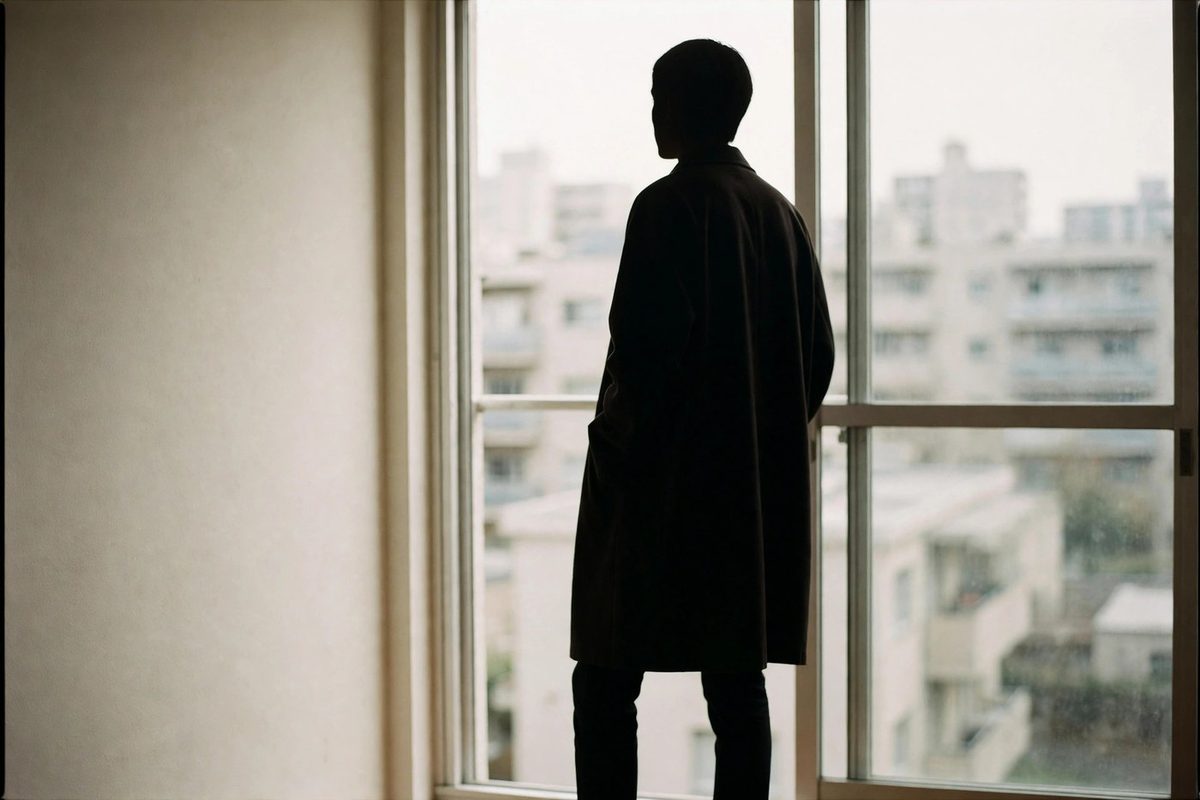
Lay the comparison out fully first. There is nothing wrong with the shopping page's way of photographing: white background, front view, even light, everything accounted for — like a product manual. Except a manual won't tell you what the garment is like worn on a body, out on the street. What the photographer does is take the clothes out of the door and put them back into the state of being worn: an early-morning street, a person hurrying to work, stride quickening, side light falling, the fabric half lit and half in shade, the collar throwing a small shadow at the neck. Clothes exist to walk, ride and be blown about with a person; put them back into life and only then do they show their true appearance. Our judgement is that the second kind of presentation comes closer to the truth. It isn't photographing the garment into something more expensive. It's pointing out what we ordinarily never see: so this is how this fabric drapes; so this is how heavy deep grey can feel, in texture, on an overcast street.
The secret of many enduring fashion photographs lies exactly here. What moves people in them is often the photographer finding, inside an everyday scene, the one second most worth looking at: the reflection on the ground just after rain, the slant of afternoon light coming through a window, a sharp silhouette flashing past in a crowd. The scenes are all ordinary people's everyday lives. The eyes are not ordinary.
02Eyes are slowly changed by photographs
This kind of training is osmotic. It requires no signing up for classes and no photographic vocabulary. It happens inside the few minutes of phone-scrolling every day — with one condition: when you look, don't merely swipe past.
People who have looked at a lot of good photographs start, walking down the street, to collect things without meaning to: one more glance at whether the stranger ahead has finished their trouser hems cleanly; a notice of how thoughtfully the light is arranged in a small shop's window; a pause, passing an office tower at dusk, to see what colours the glass facade has cut the sunset into. These reactions look unrelated to fashion. Think again and they're all related: each one is attention, reallocated. Fashion photographs first teach you to find the focal point inside a picture; slowly, you begin finding focal points in real life.
A word of fairness here for this kind of slow looking. Some people feel that staring at a garment, or a shaft of light, for minutes at a time is a refinement only the idle can afford. We don't see it that way. Where attention is placed is what a life grows into. A person with a feeling for proportion and light, eating the same food and living in the same house, will arrange a few degrees more decency out of them than someone else. This isn't affectation; it's aesthetics' most practical use. It doesn't raise your budget. It raises the level at which you use the things you already have.
Where attention is placed is what a life grows into.
03Three methods you can use today
These three methods are all taken apart from good photographs, and once taken apart they go straight onto tomorrow morning's getting dressed.
Start with proportion. Many photographs endure not because of the pieces themselves but because the relationships hold: a long coat has weight because the trousers end narrow; a loose top doesn't look sloppy because the waistline found a place to show itself. Proportion is relative, which is exactly why it's so easily overlooked — everyone stares at individual pieces. Give yourself a simple exercise: next time you stand in front of the mirror, don't look at your clothes' colours or labels. Rest your attention on the outline alone, and check whether the lengths above and below, the loose and the fitted, make a plausible silhouette. Many awkward outfits are not cases of buying the wrong clothes but of imbalanced proportion — long coat, long trousers, thick shoes, and the whole person is pressed downward. When the problem is proportion, the solution often costs nothing: roll one turn of a trouser hem, tuck a little of the top's hem in, and it's immediately different.
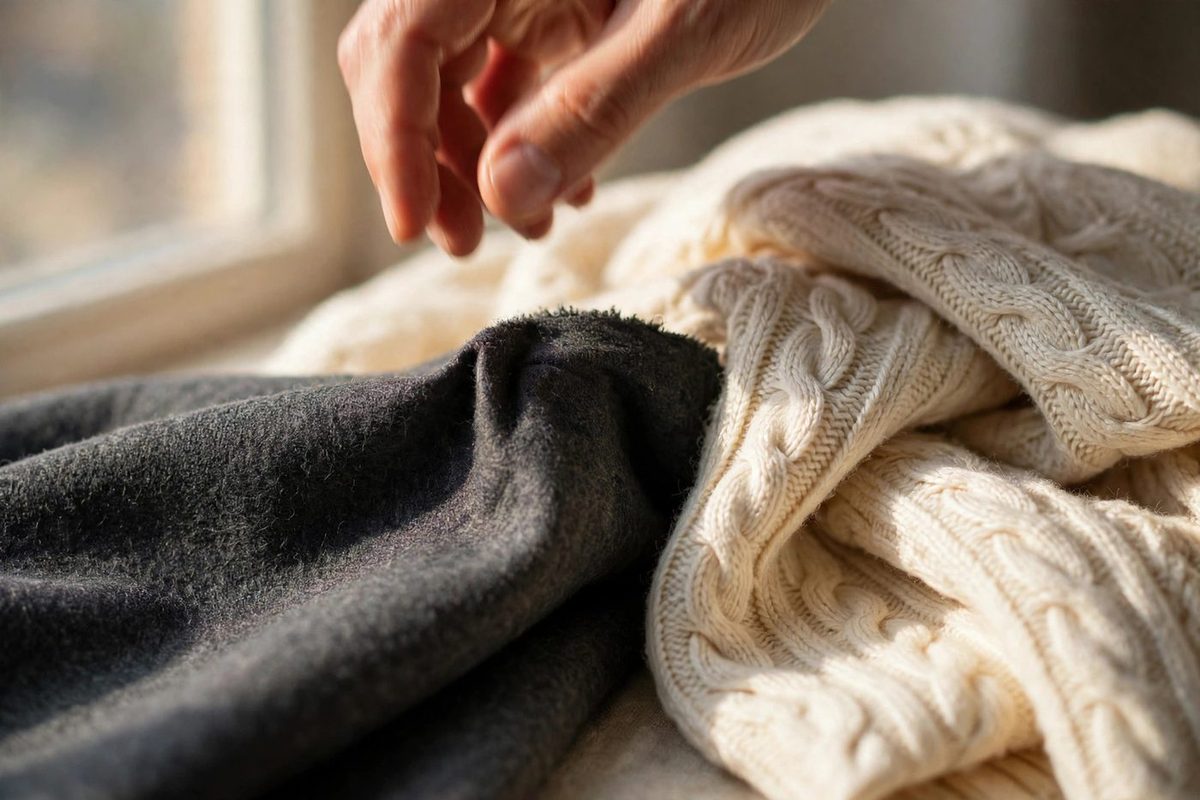
Next, fabric and light. The sense of quality in photographs is mostly donated by light. The same fabric, under a department store's overhead spots, comes out flat, with nothing in it at all; move it to side light and the texture, thickness and drape all appear. There's an inference from this that's extremely useful for shopping: shop lighting is the light that speaks most flatteringly for clothes. It makes colours brighter and fabrics smoother, which is why so many garments look good in the fitting room and revert to their true form once home under different light. The reliable practice is to carry the garment into natural light and look again — even just walking to the window by the shop door. Pilling becomes visible. Cheap shine becomes visible. Whether it hangs obediently or not becomes visible. Those ten seconds beat ten turns in the mirror under spotlights. And add one more action — plainer, but more accurate still: rub the fabric between your fingers and let go, and see how fast it recovers, and whether it holds the crease. Light is responsible for telling you how it looks; the hand is responsible for telling you how it will wear. Photographs teach the first half. When buying clothes, supply the second half yourself.
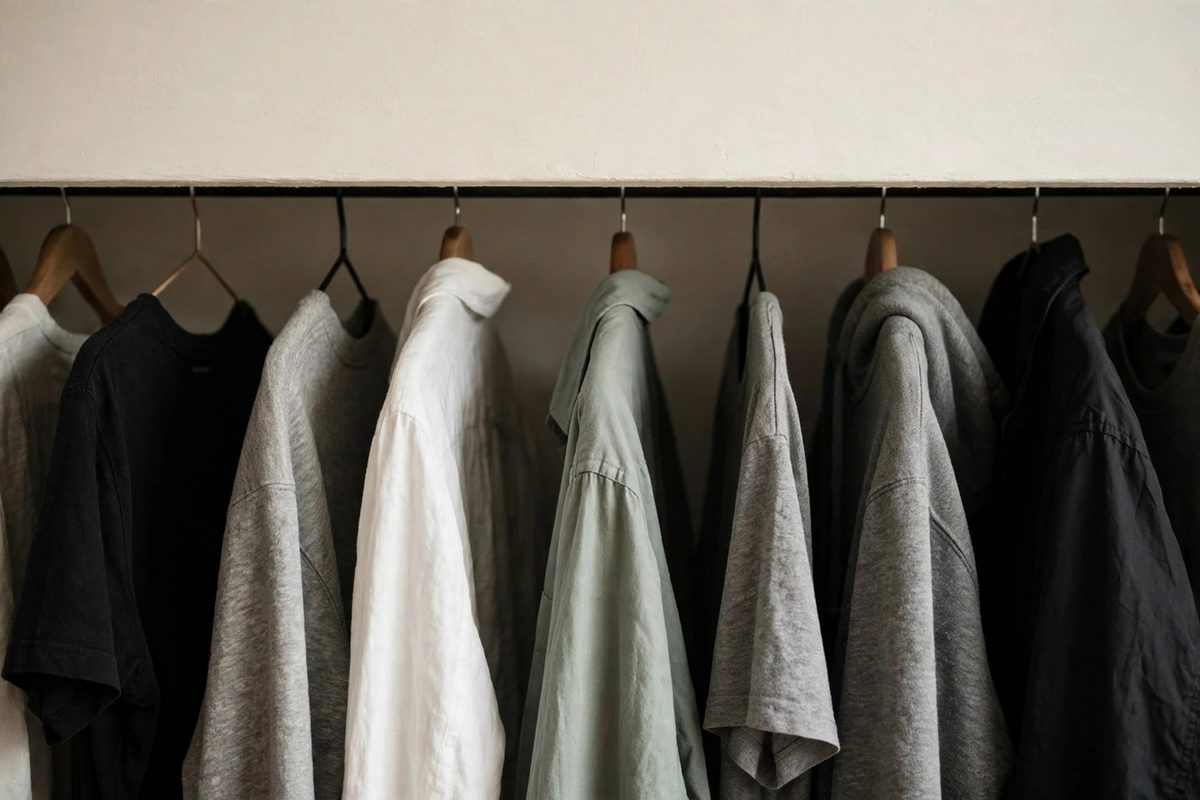
Finally, restraint in colour. Lay out the photographs that withstand repeated looking, and one shared trait stands out plainly: there isn't much colour in any of them. A body of black, white and grey, with at most one quiet colour allowed to show its head somewhere — and the whole settles. The moment colour multiplies, the eye has nowhere to land and even good pieces start stealing each other's scenes. This method transfers to daily life most simply of all: before going out, quickly count the colours on your body. More than three, and take one piece off or swap one for a basic colour. Keep just one measure in mind: a bright colour appearing once is an accent; appearing everywhere, it's noise. Finish the subtraction and the whole person is immediately cleaner — which is also why many well-dressed people's wardrobes run through the same few colours. It isn't that they can't afford more. It's knowing that more is worse than less.
04Put that eye back to work in your life
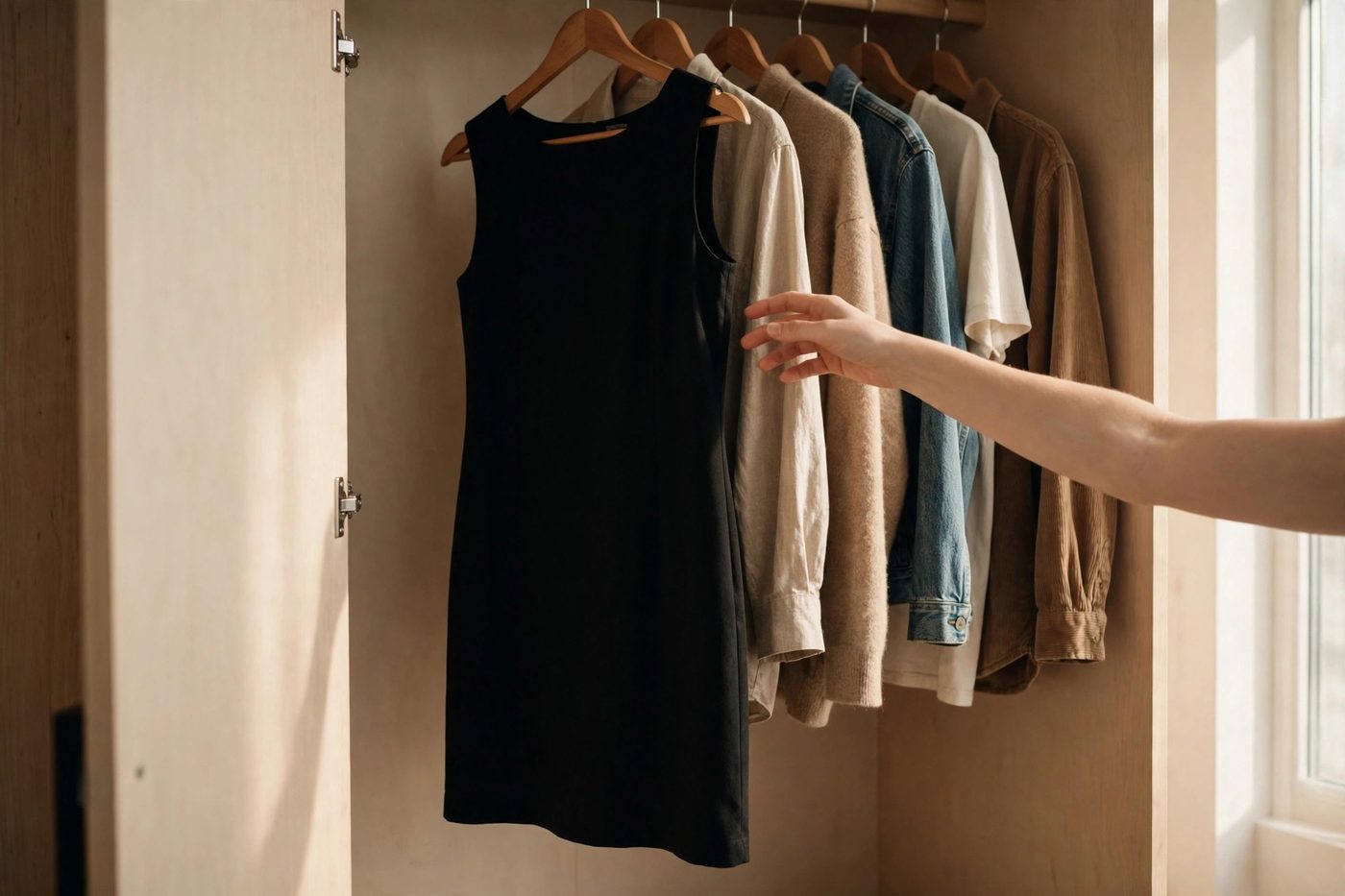
In the end, the three methods only count if they land back in life. On a weekend, tidying the wardrobe, the person who can read proportion makes the keep-or-let-go decisions most decisively: which few pieces truly carry the outfits, which were bought and worn once — the reasons are usually plain to see. Buying clothes, the person who can read fabric and light is harder to lead around by filters and lighting, and returns fewer parcels, too. Further out, that eye seeps into other parts of life: whether a dining table should be left partly empty, whether a wall should hold a picture, what colour the curtains should be — in the end, the same set of judgements as choosing a coat. Aesthetics isn't stored in compartments. It's one person's unified way of looking at the world, and clothes are simply the compartment closest to the body.
Tomorrow morning, in the last ten seconds in front of the mirror before you go out, lend them to these photographs once: roll one turn of a trouser hem, tuck a little of your top's hem in, turn sideways and check whether the outline runs smooth; then step to the window and let natural light pass over you head to toe, and count whether the colours on your body exceed three. Ten seconds spent — push the door open and go. The clothes are the same clothes. You just looked at them once more before leaving.
Source: an original essay by ANNONUS, with no external references (November 2026)