
Start with something you and I have most likely both done. The wardrobe door opens, you stand there thinking for five minutes, and in the end your hand reaches for that black dress anyway. Dates: that one. Interviews: that one. When you truly don't know what to wear: still that one. It never goes wrong. Its place in the wardrobe is a bit like the full stop in punctuation — any sentence can end with it.
But a century and a bit ago, black meant something entirely different. First of all, it was the colour of mourning. After her husband Prince Albert died, Queen Victoria wore black for nearly forty years, and how long a widow's mourning lasted, and how deep the black had to be, were governed by a whole set of rules at the time. Beyond that, black was also the uniform colour of maids and department-store shopgirls — cheap, hard-wearing, unobtrusive. For a respectable woman to go out in everyday black, back then, was faintly unlucky.
What taught the world to use black was war. After the First World War, the streets of Europe were full of young widows in black dresses. For the first time, black entered daily life on a large scale and no longer belonged only to funerals. Then, in 1926, Chanel put an extremely simple black dress into American *Vogue*, and the timing was perfect. The dress was black crêpe, long-sleeved, low-waisted, without a single superfluous decoration; in the illustration it wore only a string of white pearls. Vogue's verdict has been quoted countless times since: they called it Chanel's Ford — meaning, just as the Ford Model T had, this would be a dress women all over the world would wear.
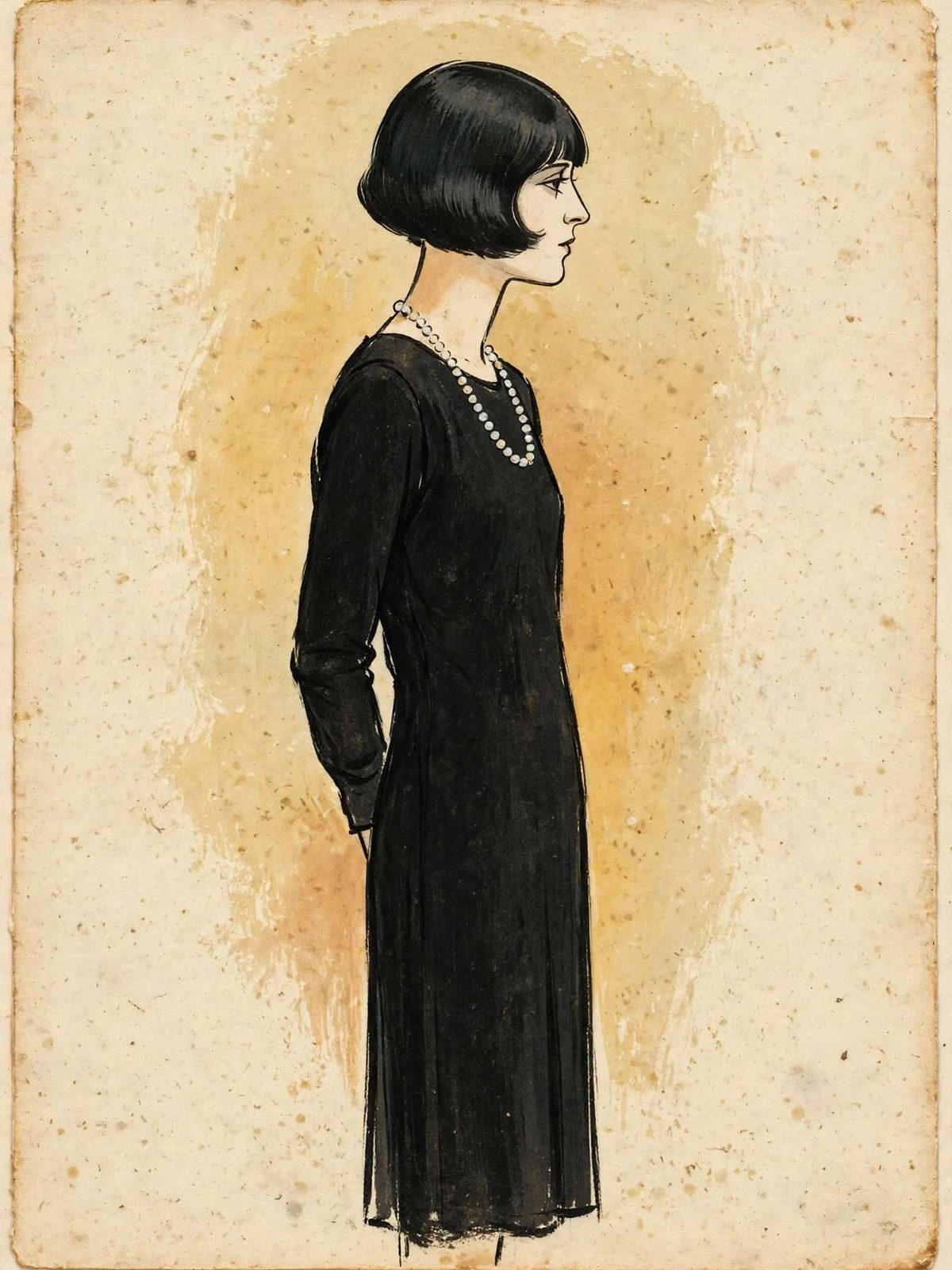
The Ford comparison is the key. What made the Model T remarkable was not performance; it was turning the car from a rich man's toy into an ordinary household possession. Chanel did the same thing: she pulled luxury out of piled-on fabric and piled-on decoration, and left only clean, sharp line. She was herself a woman who wore black dresses year-round, and she had worked as a shop assistant in her early years — what a uniform feels like, she knew better than anyone. A remark of hers has been quoted often, roughly: she imposed black on fashion, because black wipes out everything around it. It was also said at the time that in that dress, you couldn't tell the mistress from her maid. Today that sounds like a compliment; in the rigidly graded world of the day, it carried a whiff of upper-class panic.
Vogue's prophecy came true quickly. Did the other Paris designers follow? They did. American department stores simply launched the same dress at every price point, from haute couture to the ready-to-wear counter; within a few months, black dresses were on sale across America. One dress brought the original and the copy closer together than they had ever been. "Democratised fashion" sounds stirring; behind it was really the ready-to-wear industry drilling its troops.
In the 1940s, war gave it another push. Britain had clothes rationing, and a black dress — hard-wearing, forgiving of dirt, appropriate anywhere — became the most rational choice available. The same dress: wear it with a jacket to the office in the daytime, take the jacket off and change your shoes at night, and it's another outfit entirely. "One piece, many ways" — the phrase everyone repeats today — is something the little black dress was doing a hundred years ago. It is probably wardrobe economics' earliest star pupil.
In the decades that followed, the dress was reinvented every so often. In the 1930s, Wallis Simpson left behind a line: when a little black dress is right, there is nothing else to wear. The woman who said it was herself a master of the black dress; in her surviving photographs, black dresses appear with startling frequency. In 1961, the little black dress Givenchy made for Audrey Hepburn appeared in *Breakfast at Tiffany's*, and the image of her standing before the Tiffany window eating a croissant became one of the most famous fashion images of the twentieth century. That dress sold at Christie's in 2006 for over £460,000. A plain black dress, auctioned at the price of a vintage car.
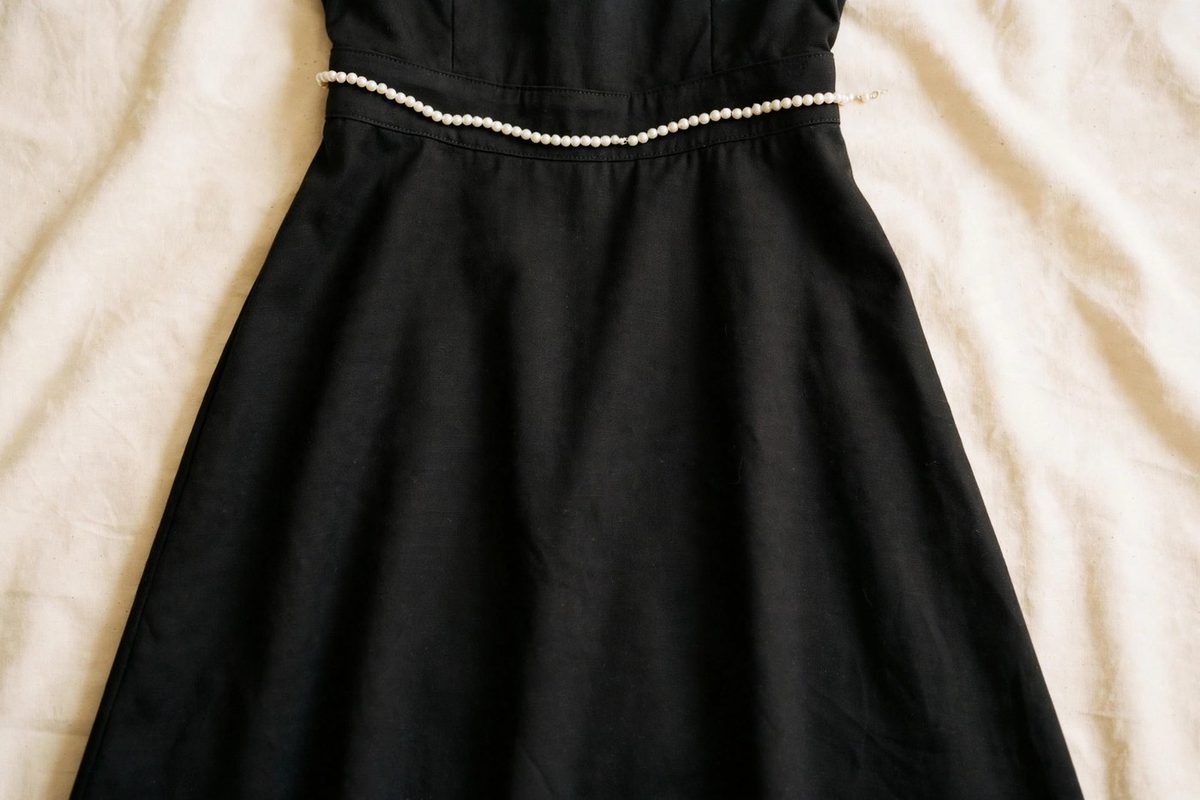
My own favourite appearance came in 1994. On the evening Prince Charles admitted his marital infidelity in a television interview, Diana appeared at a public dinner in an off-the-shoulder black dress; the photographs were in every newspaper the next day, and people later gave it a name: the revenge dress. The dress was by the designer Christina Stambolian, and Diana had bought it three years earlier — she had always felt it was too daring and never dared wear it. I've always loved that detail. It shows the revenge dress wasn't battle dress bought for the occasion; it was a decision that had waited in her wardrobe for three years. It spoke exactly the language of the 1926 dress: no explanation, no plea of injustice. One black dress, standing there — and the whole meaning had arrived.
You may have noticed that the cast of this dress's biography is entirely specific women: a queen, widows, a designer who started as a shopgirl, a princess. Unlike many classic pieces, it doesn't rely on a brand to hold up its front. It was worn into classic status by generation after generation of ordinary people. Enough people wore it, and it became a classic.
By the 1980s, women were entering offices in large numbers, and the little black dress changed its face again: a padded-shoulder blazer over it, and it became the battle dress of the first generation of professional women. String those moments together and a pattern shows: every transformation it made landed exactly on a turning point in how women lived. The logic behind it isn't mystical. It has no decoration to look after, it doesn't pick its occasions, and it asks for no styling effort before you leave the house; you can grab it in the morning and go. People who have to get out of the door and get things done need precisely this kind of un-troublesome clothing. Since 1926, this dress has been made ready for women like that. Not coincidence — temperament.
Only the black dress leaves the speaking to the woman wearing it.
So look back: the little black dress has lived a hundred years. The designs kept changing; the thing that truly never changed is that it says nothing. A sequinned dress says *look at me*. A printed dress says *I'm in a good mood*. Only the black dress leaves the speaking to the woman wearing it. The one in your wardrobe today may be of ordinary fabric and an unremarkable label, but it inherits exactly this logic: the more formal the occasion, the less it can go wrong; the more complicated your feelings, the more you can rely on it.
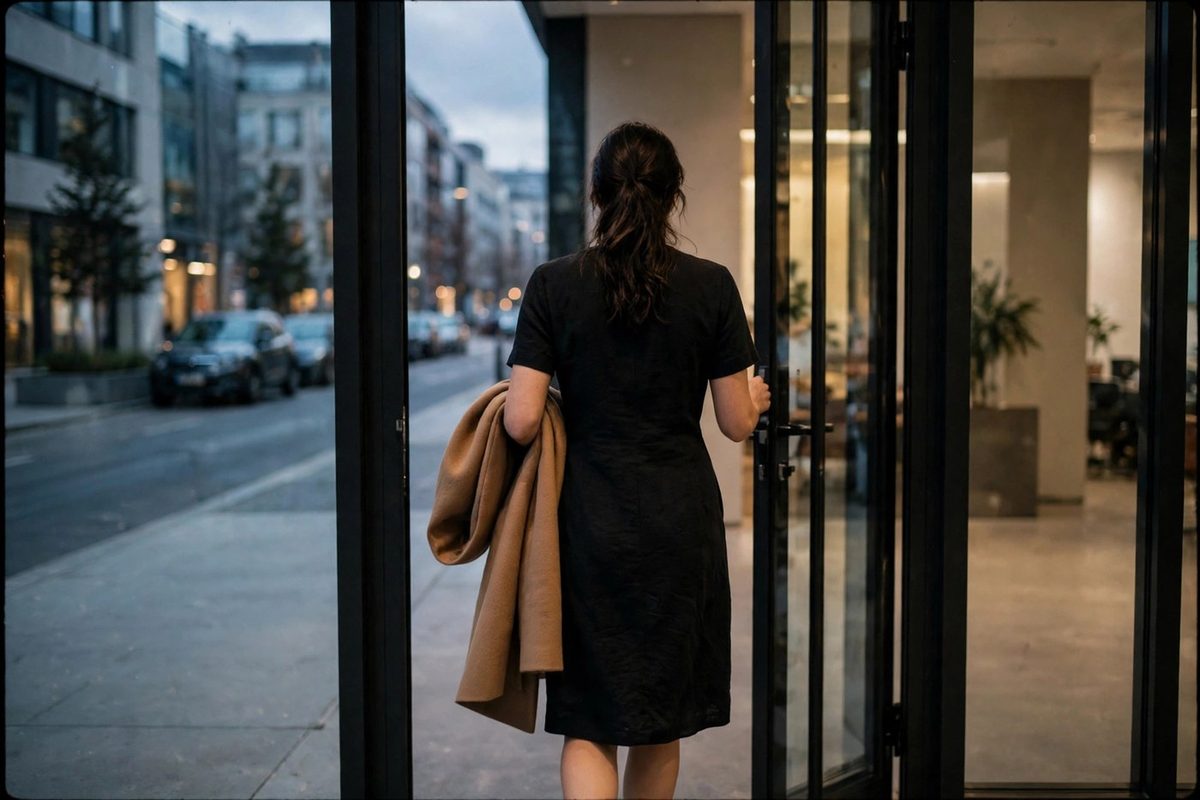
Next time you stand in front of the wardrobe, undecided, your hand will probably reach for it again. Put it on, walk out, think no more about it. A great many mornings in a hundred years have passed exactly like that.